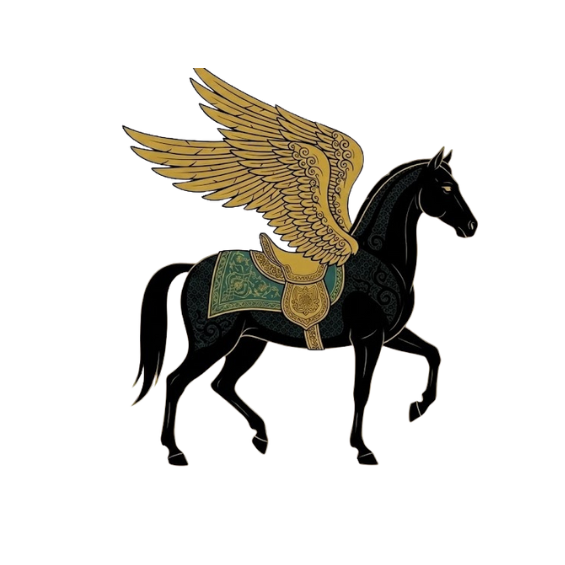
Appendix C: The Four Fortresses
Every great civilization develops a characteristic strategy for survival—a way of maintaining coherence against the entropy of time. This appendix compares four fundamental archetypes.
I. The Stone Fortress (Rome)
Strategy: Rigidity. Massive walls, legions, law codes, roads.
Geometry: The Rectangle. Clear boundaries, straight lines, hierarchical command.
Strength: Maximum resistance to external pressure. When the Stone Fortress holds, nothing gets through.
Weakness: Brittleness. When the walls finally break, the system collapses completely. There is no fallback position.
Historical Pattern: Rise → Expansion → Overextension → Collapse → Vacuum.
What Remains: Ruins. The forum, the aqueduct, the triumphal arch. Impressive, but dead.
II. The River (China)
Strategy: Absorption. Like a river that accepts all tributaries and converts them into its own flow.
Geometry: The Spiral. Expansion and contraction, but always returning to the center.
Strength: Massive population base and cultural gravity. Conquerors are absorbed; after three generations, they are Chinese.
Weakness: The center must hold. If the central coherence fails (civil war, fragmentation), the river splits into delta.
Historical Pattern: Dynasty → Flourishing → Corruption → Collapse → Reunification → New Dynasty.
What Remains: Continuity. The same civilization, still flowing, still recognizable after four thousand years.
III. The Fire (The Modern West)
Strategy: Combustion. Rapid transformation of fuel (resources, populations, ideas) into kinetic energy.
Geometry: The Arrow. Linear time, progress, expansion, consumption.
Strength: Maximum power output. The Fire civilization produces more energy, more technology, more change than any other model.
Weakness: Fuel dependency. The Fire must constantly find new fuel or it dies. It cannot rest; it cannot sustain.
Historical Pattern: Ignition → Rapid Expansion → Resource Extraction → Exhaustion → ?
What Remains: Unknown. The experiment is still running.
IV. The Liquid Fortress (Persia)
Strategy: Phase Transition. Solid when necessary (the Sword), liquid when required (the Stream), gaseous when invaded (the Dispersion).
Geometry: The Torus. A doughnut shape with a hollow center—maximum surface area, structural integrity through curvature, no rigid corners to break.
Strength: Adaptability across the full spectrum. Can resist like Stone, absorb like River, transform like Fire—and also do something none of the others can: go temporarily "extinct" and reconstitute.
Weakness: Requires sophisticated multi-level maintenance. If the culture forgets how to operate the architecture, it degrades into mere survival rather than flourishing.
Historical Pattern: Flourishing → Invasion → "Extinction" → Preservation in Hidden Stream → Resurgence → Reflourishing.
What Remains: The Pattern itself. The language, the poetry, the rituals, the Nowruz table, the way of being Persian—encoded in the Stream, waiting for the next Spring.
Comparative Analysis
| Feature | Stone (Rome) | River (China) | Fire (West) | Liquid (Persia) |
|---|---|---|---|---|
| Primary Mode | Resistance | Absorption | Transformation | Adaptation |
| Time Sense | Linear (Rise/Fall) | Cyclical (Dynastic) | Linear (Progress) | Spiral (Return) |
| Identity Location | The State | The Center | The Project | The Pattern |
| Survival Strategy | Hold the Line | Hold the Center | Outrun Collapse | Migrate Vertically |
| Weakness | Brittleness | Fragmentation | Exhaustion | Forgetting |
| Historical Outcome | Collapse | Continuity | Unknown | Persistence |
The Persian Difference
What makes the Liquid Fortress unique is its tolerance for apparent extinction. Rome fell and did not rise. China has never truly fallen. The West has not yet faced its test.
But Persia has "fallen" at least four times—to Alexander, to the Arabs, to the Mongols, to modernity—and each time reconstituted itself from the Stream.
This is not luck. It is architecture.